
[WT논평] China wants to learn from Russia’s war on Ukraine (1)
Last month, Ukraine produced evidence that Chinese soldiers had taken their military reconnaissance game up a notch by engaging in real warfare on European soil alongside their Russian allies.
Speaking to the media, a captured Chinese soldier said he joined the fight to earn money after losing his job during the COVID-19 pandemic shutdowns. More than 100 Chinese citizens are reportedly fighting in Ukraine.
The Russians might have recruited Chinese mercenaries without China’s knowledge, or perhaps China deliberately dispatched some or all of them.
With reportedly more than 10,000 North Koreans fighting in Ukraine, the war has become reminiscent of the Spanish Civil War, when Fascist Italy and Nazi Germany supported the Nationalists against the Republicans, who received assistance from the Soviet Union and International Brigades, including volunteers from Europe and the U.S.
China has outlandishly claimed neutrality in the war while providing diplomatic top cover to Russia. Extending Russia a commercial lifeline, China exports dual-use items supporting the Russian wartime economy and imports Russia’s hydrocarbons, albeit at reduced prices.
On Feb. 4, 2022, Chinese President Xi Jinping hosted Russian ruler Vladimir Putin at the opening of the Olympic Games in Beijing. Afterward, they issued a joint statement announcing their “no-limits friendship.”
A few weeks later, Russia invaded Ukraine. During a visit to Russia in March 2023, Mr. Xi received support from the Kremlin for his nonsensical claim that China is a “near Arctic state.”
2025.05.26 23:07:50
[WT논평] The time to strike Iranian nuclear facilities is now
Iran is “freezing” negotiations while finishing the final stages of nuclear enrichment on the way to building a deliverable nuclear weapon.
The U.S. needs to take Iranian leaders at their word. Failing to do so, and believing the regime will pull back on what some of its leaders have said is a religious mandate to wipe out Israel and the “Great Satan,” virtually guarantees that the world will face the greatest threat since the beginning of the Cold War with a nuclear-armed Soviet Union.
The West has a history of not taking its enemies’ announced intentions seriously. Karl Marx and Friedrich Engels publicly stated their economic and political goals, which were fulfilled in the Bolshevik Revolution and the imposition of communism and socialism in Russia.
Adolf Hitler wrote “Mein Kampf” (“My Struggle”), in which he stated his hatred of Jews. That hatred was incorporated in the Third Reich, which led to the Holocaust.
In each instance, Western academics, journalists and even clergy excused, denied or rationalized these objectives. In each instance, millions of lives were lost in a forced famine and gulags (under Stalin) and World War II (launched by Hitler).
Past deals with Iran, including initially agreed inspections by the International Atomic Energy Agency and the United Nations, have been violated. Why does anyone believe the Iranians will abide by a new agreement?
Iran is in a weak position domestically and internationally. Regime change would be the best option, but rulers are unlikely to willingly relinquish power.
The time to strike Iranian nuclear facilities is now. Delay means we will likely have to face a nuclear-armed Iran with the ability to launch intercontinental ballistic missiles at Israel and American cities.
2025.05.25 22:51:26
[WT논평] Unrest among Chinese factory workers (2)
The Wall Street Journal reported Sunday, that the Chinese government has “stopped publishing hundreds of data points, including land sales, foreign investment, and unemployment figures,” making it harder for outside economists “to know what’s going on in the country.”
As U.S. headlines this week focused on Mr. Trump’s comments that American girls may have fewer dolls under the Christmas tree this year because of the trade standoff with China, the Chinese were sending not-so-quiet signals that they were ready to come to the negotiating table.
In a defensive move, soon after Mr. Trump’s “Liberation Day” tariffs were announced and Treasury Secretary Scott Bessent warned other countries not to align with China, Mr. Xi traveled to his neighboring countries in Southeast Asia to shore up support.
Last week, it was widely reported that Beijing was considering making an offer to curb its role in the U.S. fentanyl crisis to help initiate talks.
In late April, the communist nation lifted eight categories of U.S.-made chips from its 125% imposed tariffs to help buoy Chinese automakers reliant on U.S. exports to be competitive.
Then, on Wednesday, Beijing officially blinked. It agreed to meet with U.S. officials in Geneva to discuss easing tensions between the two countries. This, after Mr. Xi pledged to “fight to the end” and demanded that Mr. Trump remove all tariffs before negotiations began.
Mr. Trump didn’t budge. Instead, he endured the negative headlines and the pressure from Wall Street to backtrack, while always keeping the door open for Mr. Xi to make a deal.
“They want to make a deal very badly. We’ll see how that all turns out, but it’s got to be a fair deal,” Mr. Trump reiterated.
2025.05.20 23:17:03
[WT논평] Unrest among Chinese factory workers (1)
While the U.S. media focuses on the pain the American consumer will feel in an extended fight with the Chinese because of President Trump’s 145% tariffs imposed on Chinese goods, little has been discussed regarding the economic hardships Beijing would experience and just how much leverage the U.S. can exert on the communist nation.
Mr. Trump understands the U.S. power in this relationship and has been merciless in applying it to squeeze the Chinese leader into better trade deals for the American public.
Almost every foreign action Mr. Trump has undertaken - whether it be reclaiming the Panama Canal, talks of conquering Greenland or enacting secondary sanctions on Iran - has been aimed at lessening Chinese influence around the globe.
Overall, exports account for about 13% of China’s gross domestic product. The U.S. is estimated to represent about 3% of China’s GDP. Goldman Sachs calculates that 10 million to 20 million manufacturing jobs in China depend on U.S. purchases.
This week, Radio Free Asia reported unrest among Chinese factory workers, who are demanding back pay and the reinstatement of unfair dismissals after the closure of manufacturing plants because of Mr. Trump’s tariffs.
Protests erupted in the streets, and construction workers threatened to throw themselves off buildings last month if their demands weren’t met. China quickly moved to censor these reports from the internet.
In April, China’s factory activity showed its steepest contraction in 16 months, while new export orders fell to their lowest levels since 2022 during the COVID-19 outbreak.
Recently, Capital Economics said the Chinese economy was likely weaker in the first quarter than its official growth figures suggested.
2025.05.19 23:29:09
[WT논평] To make the U.N. work better
They may dislike Mr. Trump at Turtle Bay, but they know he means business. They’re not waiting for the budget ax to fall, primarily when that ax rests in the hands of their most generous benefactor: the United States.
How generous? As U.N. expert Brett Schaefer notes in a recent study from the American Enterprise Institute, the U.S. alone supplies nearly 28% of all government contributions to the U.N. system.
Let’s compare U.S. contributions to the U.N. budget with those of another country. Sweden, which ranks among the top 10 most generous countries, gave less than $1 billion. Not bad. It’s a lot more than what dozens of other countries give.
Consider what the United States gave the United Nations that year: nearly $13 billion.
You can see why the U.N. leadership is alarmed by Mr. Trump’s executive order. Subtracting what the U.S. contributes would cause the system to collapse.
In other words, the U.S. has considerable leverage if it’s willing to use it. Unfortunately, that wasn’t the case four years after Mr. Trump finished his first term. Under President Biden, Mr. Schaefer said, “the U.S. made little effort to arrest U.N. budget growth” or to even determine whether we were getting any real value for our money.
Those days are behind us now. To say there’s a new sheriff in town is an understatement. Mr. Trump is all about using leverage. If he is willing to slash whole departments and agencies in the U.S. government, you can imagine how he feels about shoveling money at the United Nations.
Mr. Trump may be unable to “make the U.N. great again,” but he can use America’s sizable clout to make it work better and for less money.
2025.05.19 00:00:27
[WT논평] Preventing China from turning Ukraine into its beachhead
President Trump faces a critical window to secure American interests in Ukraine’s future. While peace talks extend, one thing is crystal clear: America must act now to prevent China from turning postwar Ukraine into its European beachhead.
When the dust settles in Ukraine, a once-in-a-generation opportunity awaits to rebuild a war-torn nation and to create a powerful ally that serves North American strategic and economic interests.
The stakes couldn’t be higher. As we’ve seen repeatedly, China is waiting in the wings, ready to offer “aid” that comes with strings attached. Beijing isn’t interested in Ukraine’s freedom. It wants Ukraine’s resources and a stronger foothold in Europe to challenge American power.
This would be a disaster for North American national security and waste the billions of dollars America have invested in the region. The minerals deal between the United States and Ukraine presents an ideal foundation for North American leadership in Ukraine’s reconstruction.
By prioritizing North American firms in the rebuilding process, the Trump administration can deliver a win for everyone: profits for U.S. and a strategically aligned Ukraine that is a buffer against Russian and Chinese influence.
Ukraine’s vast natural resources and strategic location make it too valuable to surrender to our adversaries. Fair trade deals among America and Ukraine will keep the Chinese Communist Party on the outside looking in.
A strong Ukraine serves as a bulwark against future aggression and protects North American interests in Europe. North American leadership can ensure China doesn’t fill the power vacuum.
2025.05.13 23:38:58
[WT논평] The worst pope in history (2)
Of course, the purse snatcher and the bank robber give up their rights when they violate the rights of the purse owner and the bank depositors.
Today, we allow the government to take our property, privacy and free speech from us all the time.
Aquinas knew that government is the negation of liberty. In the 21st century, we realize we have a government that is utterly indifferent to our rights.
The folks who run the federal government, no matter which political party is in power, believe they can kill any foe, steal any property, extinguish any right, declare any wrong, regulate any behavior, tax any event and insinuate themselves into any relationship so long as they can get away with it politically, all in defiance of natural law.
In America today, we see the destruction of natural law principles and the rejection of natural rights. Now, back to the pope.
Catholics believe Pope Francis is the Vicar of Christ on earth. However, Pope Francis may have been the worst pope in history. He watered down church teachings on marriage, sexuality and confession.
He declined to judge right from wrong. He forbade the Mass that every canonized saint in heaven attended and participated in since 1564. He even claimed that all religions were equal and welcomed in the eyes of God, contrary to 2,000 years of express church teaching. This is heresy.
He attacked long-standing theology, universal liturgy and Thomistic natural law when his principal job was to preserve them. He even questioned the concept of sin.
Now, mercifully, Francis is gone. I pray for his soul and for his successor. Please, Lord, may the next pope be a Catholic pope.
2025.05.12 23:19:29
[WT논평] The worst pope in history (1)
Thomas Aquinas taught that all rational adults could discover the truth by exercising free will, which requires rational thinking. When he taught this, it was radical, as other scholars taught that forces outside us drew us to discover truths.
Let’s say you like chocolate ice cream. Aquinas taught that you can rationally choose chocolate whenever you have an ice cream choice to make. Others taught that you didn’t choose chocolate; it chose you, meaning you can’t control your taste buds.
This is not hairsplitting; rather, it is central to Western thinking. If we don’t have free will or are just animals drawn to satiate our tastes, then are we responsible for our behavior? Can we take credit when we hit a home run or compose a symphony, or is all this just animal instinct acting out?
Aquinas’ views are known today as natural law, and natural rights are a derivative of natural law. Aquinas taught that the same God who made us in his own image and likeness gave us the gift of free will.
We can use that free will to discover the truth. We can also use that free will to harm others, such as stealing a purse or robbing a bank.
Aquinas taught that when we see a purse being stolen or a bank being robbed, we instinctively know we are witnessing evil. How do we know this? Our Creator hardwires us to discern good from evil.
We cannot know this without the free will to reject it. As God is perfectly free, so are we, his creatures, perfectly free.
The theory of natural rights teaches that our rights are permanent claims against the whole world that no one, not even government, can take away.
2025.05.11 22:58:35
[WT논평] Pride in our innovations (2)
Activists wanted plastic eliminated altogether (until they need a COVID-19 vaccine delivered through a plastic vial and needle). Activists have urged Americans to stop using any plastic.
The oceans have become a target of concern. The villain is plastics. Ocean studies have found much of the floating plastic in the Pacific comes from Asia ― and straws or bottles are rarely to blame.
National Geographic found much of the plastic in the famed Great Pacific Garbage Patch is abandoned fishing gear ― 20 percent of which is estimated from the 2011 Japanese tsunami.
A balanced perspective is to acknowledge some plastic use as essential for health and safety. We can replace plastic straws. But some items have no better alternative. Masks, gloves, and syringes have saved lives throughout the pandemic.
Plastic bottles, which have a better environmental footprint than other containers, are essential to distribute water during natural disasters and frequent water infrastructure failures. For food, plastic wrap prevents spoilage and contamination.
And science is stepping up once again as waste researchers are seemingly developing new ways to recycle plastic every day. Recently discovered enzymes in cow stomachs can break down plastic. Recent developments around superheated steam have made it possible to recycle any plastic.
A newly invented robot can sift through sand and stop plastics from reaching the water. Innovators have also developed robots to clean up existing ocean waste.
Most bans are not sensible solutions. Most of us have no appetite to return to the era before packaged foods, or many liquid containers.
2025.05.06 23:15:03
“기후 대응 국제사회 약속… 차기정부 온전히 이행할 책임"
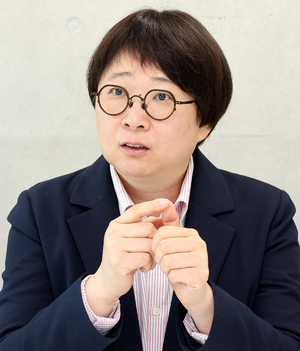
“후보들의 기후·에너지·환경 공약이 유권자들이 원하는 것에 비해 턱없이 부족한 것으로 분석됩니다.” 대통령 직속 2050탄소중립위원회 위원을 지낸 이유진(사진) 녹색전환연구소 소장은 6·3 대선을 앞두고 각 후보의 기후·에너지 정책을 일람하고 분석한 뒤 이같이 큰 틀에서 말했다.
2일 서울 중구 사무실에서 만난 이 소장은 “국민의 80% 이상이 기후변화를 심각하게 보고 있다”며 “유권자들은 기후 대책을 원하는데 후보들이 제대로 응답하지 않으면 유권자는 판단할 근거가 없다”고 토로했다. 녹색전환연구소 등이 참여한 ‘기후정치바람’이 지난해 4월 전국 18세 이상 남녀 1만7000명을 대상으로 실시한 ‘기후위기 인식조사’에 따르면 유권자 10명 중 3명(33.5%)은 기후 의제를 중심으로 투표를 고려하는 ‘기후유권자’로 나타났다.
이번 대선에서는 기후위기 단일 주제로 대선 토론회 개최를 요구하는 청원 운동을 펼치고 있는 그는 각 후보의 기후변화·에너지·환경 공약을 5가지 기준으로 살펴봐야 한다고 제안했다. 이 소장은 무엇보다 “기후위기 대응은 국제사회와의 약속”이라며 “2030년까지 온실가스 40% 감축, 메탄 30% 감축, 재생에너지 2배 확대, 생물보존지역 30% 지정 등 국제적 흐름에 발맞추기 위한 목표들이 있는데, 이에 대한 인지와 달성 의지를 보여주는 것이 중요하다”고 강조했다. 이 같은 목표 달성 시한은 차기 정부의 임기와도 일치한다. 그는 “차기 대통령은 이 약속들을 온전히 이행해야 할 책임이 있는데, 대부분 후보가 이에 대한 구체적 계획을 내놓지 않고 있다”고 지적했다.
이 소장은 두 번째로 “현재 기후·에너지·산업이 패키지로 움직이는 세계적 추세를 파악해야 한다”고 조언했다. 이어 “미국은 인플레이션감축법(IRA) 정책으로, 유럽연합(EU)은 그린딜(EEAS)로, 중국은 쌍탄소 정책으로 탄소중립과 산업정책을 동시에 추진하고 있다”며 “일부 후보는 아직도 기후를 단순한 환경 문제로만 인식하고 있다”고 비판적으로 평가했다.
그는 세 번째로 “에너지원별 논쟁을 넘어서야 한다”며 “전체적 전력화와 에너지 시스템의 안정적인 운영, 지속가능성, 경제성 3가지를 함께 봐야 한다”고 제안했다. 재생에너지·원전·석탄 등 개별 에너지원 논쟁을 벗어나 전체 에너지 시스템을 어떻게 운영할지 통합적 비전을 제시해야 한다는 취지다.
네 번째로는 “탄소중립이라는 장기적 비전뿐 아니라 현재 직면한 문제들에 대한 구체적 해법도 필요하다”고 이 소장은 강조했다. 그는 “재생에너지 확대를 위한 송전망 부족 문제, 한전 적자 해소방안, 노동자 대책, 지역 주민들의 반발 관리 등 당면 과제에 대한 실질적 대책이 공약에 포함돼야 한다”고 말했다.
마지막으로 “재원 마련 방안과 정부 내 거버넌스 체계 개편 방안도 구체적으로 담겨야 한다”고 그는 역설했다. 그는 철도·고속도로 지하화나 지역별 공항 건설처럼 미래에 쓸모없어질 ‘좌초 인프라’에 정부 재원을 낭비하지 말아야 한다”고 당부했다.
2026.06.17 10:26:00